Japanese drugstores sell a huge range of over-the-counter (OTC) medicine, and many visitors either need something during their trip or want to take a few boxes home. The system is easy to use once you know three things: how medicines are classified, who is allowed to sell them, and which products now come with a purchase limit.
A quick note on who is writing: I work in cosmetics development in Japan. I am not a pharmacist or a doctor, so this guide does not tell you what to take. It explains how the system works so you can ask the right questions at the counter.
The short answer
- Japanese OTC medicines are sorted into risk classes that are printed on the box. The higher the class, the more the store has to explain — and Class 1 can only be sold by a pharmacist.
- Since May 1, 2026, products containing certain ingredients that can be misused (several of them common in cold and cough medicines) are generally sold one pack per person, and staff may ask you a few questions.
- Rules for bringing medicine home are set by your destination country, not by Japan. Some ingredients that are ordinary in Japanese cold medicine are tightly controlled elsewhere.
How Japanese OTC medicine is classified
Look for a small label in a box or circle on the package. It tells you the class.
| Label on the box | What it means | Who can explain and sell it |
|---|---|---|
| 要指導医薬品 (Requires guidance) | Medicines that recently switched from prescription-only, or need special care | Pharmacist only, with face-to-face explanation |
| 第1類医薬品 (Class 1) | Ingredients that need particular care | Pharmacist only |
| 指定第2類医薬品 (Designated Class 2) | Class 2 items with ingredients that need extra caution | Pharmacist or registered seller |
| 第2類医薬品 (Class 2) | Ingredients that, rarely, can cause serious side effects | Pharmacist or registered seller |
| 第3類医薬品 (Class 3) | Lower-risk items | Pharmacist or registered seller |
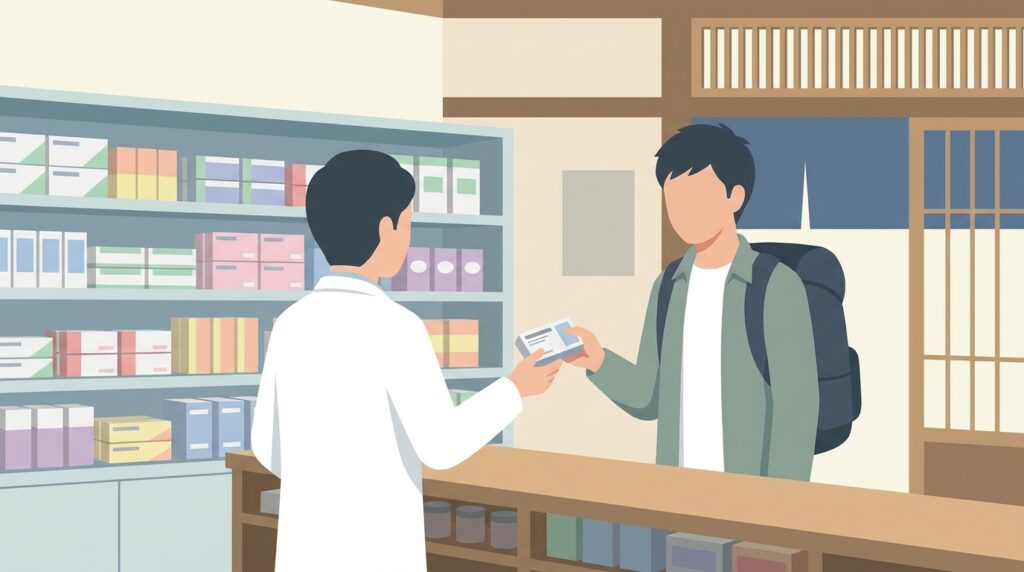
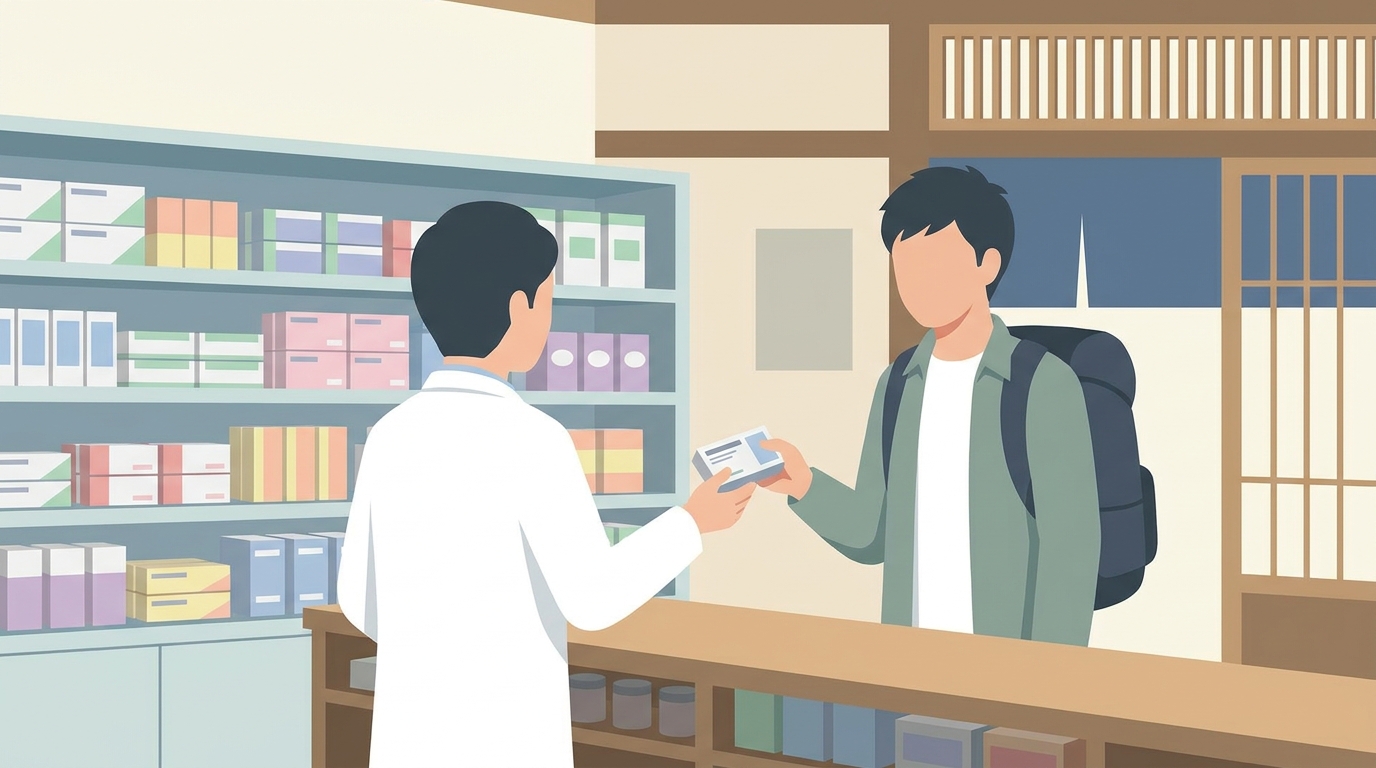
“Registered seller” (登録販売者) is a qualified sales professional who can handle Class 2 and 3 products. Because Class 1 needs a pharmacist, those products may be unavailable late at night even in stores that are open 24 hours.
Reading the box
Most of what you need is in four places on the package:
| Japanese | Meaning |
|---|---|
| 効能・効果 | What the product is approved to be used for |
| 用法・用量 | How much to take, how often, and from what age |
| 成分 | Active ingredients and amounts |
| 使用上の注意 | Warnings: who should not use it, what not to combine it with |
Tips:
- A translation app’s camera mode handles most boxes well. For anything you are unsure about, show the box to the pharmacist.
- Don’t double up. Japanese cold medicines often combine several ingredients (for fever, cough, runny nose). Taking two different cold products, or a cold product plus a separate painkiller, can mean taking the same ingredient twice.
- Check the age line if you are buying for a child — dose and suitability differ.
The new purchase limit (since May 1, 2026)
Japan’s revised pharmaceutical law created a category called 指定濫用防止医薬品 — roughly, “designated misuse-prevention medicines.” Products containing any of eight designated ingredients fall into it:
- ephedrine
- codeine
- dihydrocodeine
- diphenhydramine
- dextromethorphan
- pseudoephedrine
- bromovalerylurea
- methylephedrine
Several of these are common in cough, cold, allergy and sleep-aid products. For these items:
- They are generally sold one pack per person.
- Staff may ask you some questions (for example, who will use it, and whether you are buying it elsewhere too).
This is not aimed at tourists — it applies to everyone, and it is a misuse-prevention measure. Just don’t expect to buy several boxes of the same cold medicine for friends back home.
Bringing Japanese medicine home
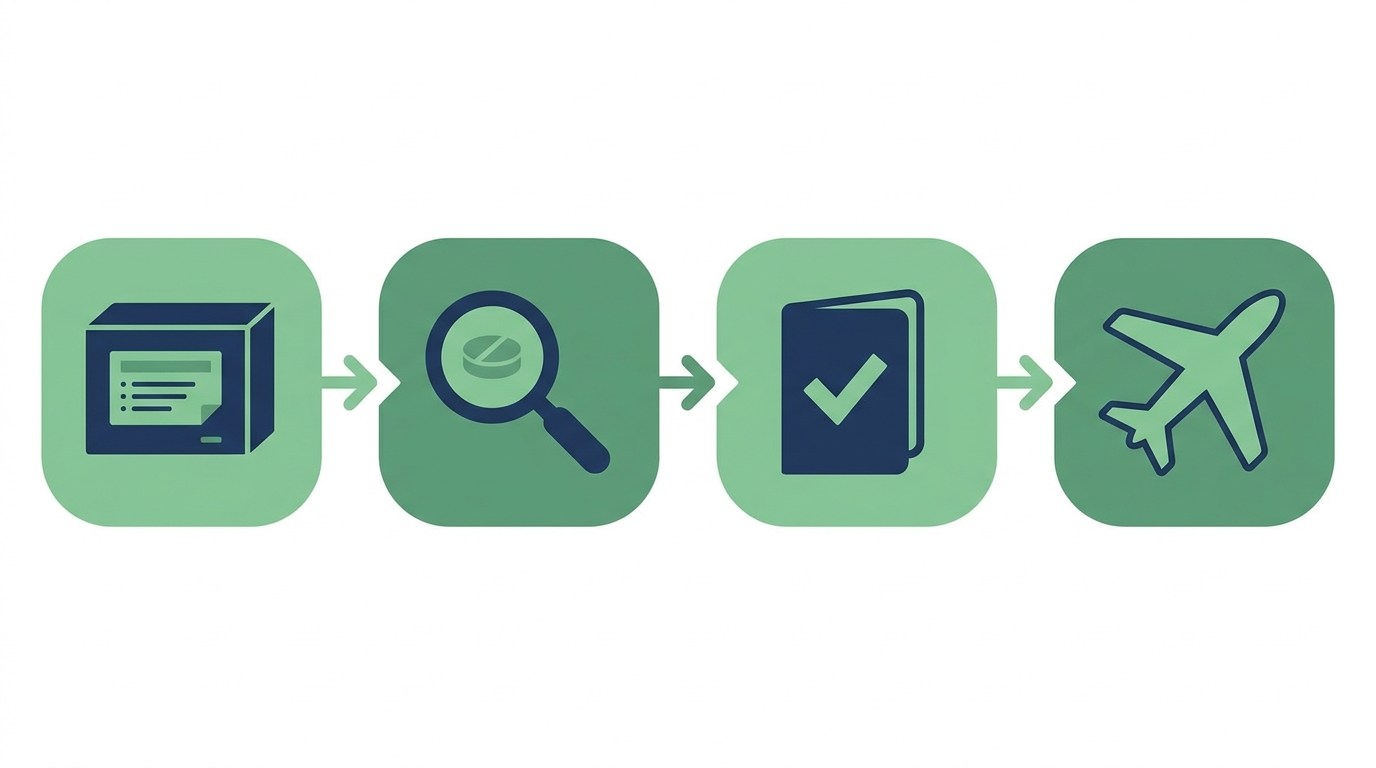
This is the part most travelers miss. Your destination country decides what you can bring in.
- Ingredients such as codeine, dihydrocodeine, pseudoephedrine and ephedrine-type ingredients are controlled in many countries. Some require advance permission or a doctor’s letter even for small personal quantities, and penalties can be serious.
- Keep medicine in its original packaging with the ingredient list visible.
- Carry only a personal-use amount.
- Before you buy, check your country’s customs or health authority website for its rules on importing medicine for personal use.
If you are traveling onward to another country before going home, check that country’s rules too — transit stops count.
Common categories visitors look at
Without naming products, these are the OTC categories travelers most often ask about in Japanese drugstores:
- Cold and flu medicine — often multi-ingredient; check for the eight designated ingredients above if you plan to take it home.
- Pain and fever relievers
- Stomach and digestive medicine
- Pain-relief patches for shoulders and back
- Eye drops — see Why Do Japanese Eye Drops Feel So Cool?
- Motion-sickness medicine
For cosmetics, sunscreen and the tax-free rules that changed on November 1, 2026, see What to Buy at a Japanese Drugstore.
FAQ
Can I get my usual prescription medicine at a Japanese drugstore? Prescription-only medicines need a prescription from a doctor in Japan. If you take regular medication, bring enough for your trip — and check Japan’s own rules for bringing medicine into the country before you travel.
Do pharmacists speak English? Many drugstores in tourist areas can help in English or use translation devices, but it varies. Showing the box and pointing to the ingredient list helps a lot.
Why did the store ask me questions when I bought cough medicine? It probably contains one of the designated misuse-prevention ingredients. Since May 2026, stores are required to check before selling these.
What should I do if I feel seriously unwell? Don’t rely on OTC medicine. In an emergency in Japan, call 119 for an ambulance. For non-emergencies, ask your hotel or a pharmacist to help you find a clinic that accepts foreign patients.
This article explains how Japan’s OTC medicine system works. It is not medical advice and does not recommend specific products. Always follow the package directions and ask a pharmacist or doctor if you are unsure.
Sources
- Saitama Prefecture, OTC medicine risk classes (第1類・第2類・第3類 and who may sell them): https://www.pref.saitama.lg.jp/a0707/riskkubun.html
- Tokyo Metropolitan Institute of Public Health, labeling of guidance-required and OTC medicines: https://www.tmiph.metro.tokyo.lg.jp/k_yakuji/i-kanshi/otc-hyouji/
- MHLW, ingredients, products and quantities for medicines at risk of misuse (one-pack sales guidance): https://www.mhlw.go.jp/file/05-Shingikai-11121000-Iyakushokuhinkyoku-Soumuka/0000037186.pdf
- Nikkei Medical, eight ingredients designated as misuse-prevention medicines (Jan 2026): https://medical.nikkeibp.co.jp/leaf/mem/pub/di/trend/202601/591925.html
- Daiichi Sankyo Healthcare, notice on the MHLW designation and label revisions (Feb 2026): https://www.daiichisankyo-hc.co.jp/precautions/info260216.html